
This project was completed as part of the 2026 Hampshire Hospitals NHS FT Green Team Competition.
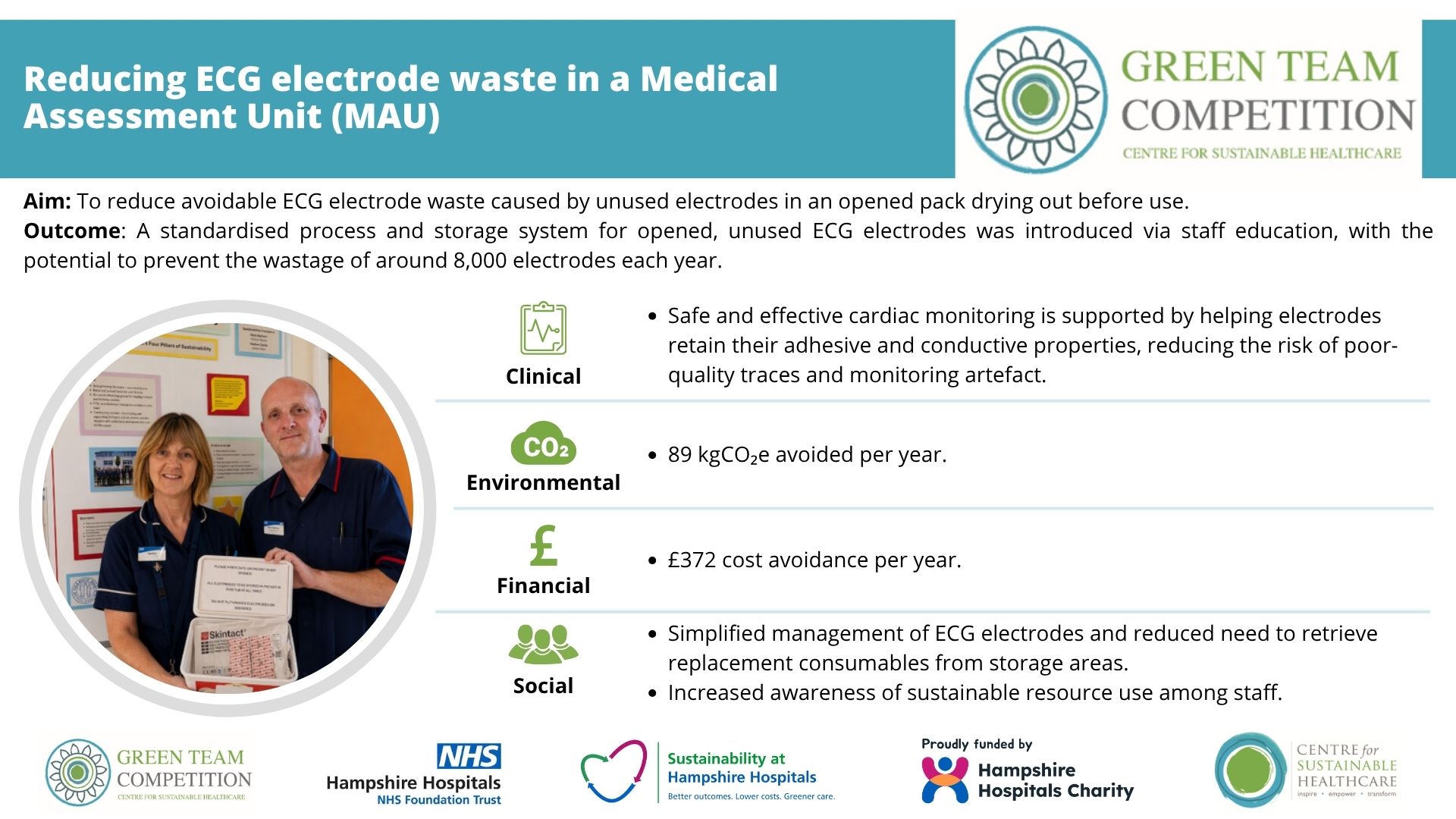
Team members
- Nadine Clarke, Senior Sister, McGill Ward
- Mark Badham, Clinical Matron, McGill Ward
Setting / patient group
This project was undertaken in the 31-bed McGill Ward Medical Assessment Unit at Winchester Hospital. The ward receives patients from the Emergency Department and direct GP referrals, many of whom require continuous cardiac monitoring. Disposable ECG electrodes are used routinely to support cardiac monitoring and the identification of acute cardiac conditions and arrhythmias.
Issue
ECG electrodes are supplied in strips of six, but typically only four electrodes are required for patient monitoring. Unused electrodes were frequently not returned to their protective packaging, causing them to dry out and become unusable. A baseline seven-day audit identified 203 electrodes wasted, equating to an average of 29 electrodes per day. Procurement data showed that approximately 24,000 electrodes were used annually, with around one-third (8,000 electrodes) estimated to be wasted through avoidable storage-related spoilage. This unnecessary waste contributed to increased procurement costs, additional clinical waste and avoidable carbon emissions.
Intervention
The team introduced a standardised process for storing unused electrodes in designated containers located within patient bays. Storage containers were created using cleaned and labelled repurposed ice cream tubs, avoiding the purchase of new equipment. Staff received targeted education on the environmental, financial and clinical implications of electrode waste and the importance of correct storage practices. Ongoing staff engagement supported understanding and ownership of the intervention. The project was delivered using existing ward resources without additional funding or capital investment. A repeat audit was planned three months after implementation to assess the impact.
Potential Outcomes
Clinical
No adverse impacts on patient care were identified. The intervention supports safe and effective cardiac monitoring by helping electrodes retain their adhesive and conductive properties, reducing the risk of poor-quality traces and monitoring artefact. Direct patient outcomes were not measured within the project timeframe.
Environmental
A carbon footprint assessment found that one box of ECG electrodes generates approximately 14.8 kgCO₂e across its lifecycle. Based on procurement and audit data, the team estimated that preventing the wastage of approximately 8,000 electrodes annually could avoid around 89 kgCO₂e per year. The intervention also reduces unnecessary disposal of ECG electrodes and the associated demand for replacement stock.
Financial
Annual expenditure on ECG electrodes was £847. Reducing the estimated 33% wastage rate could prevent the unnecessary disposal of approximately 266 foil packs each year and generate estimated annual savings of £372. The intervention required no additional capital investment because existing materials were repurposed for storage.
Social
Staff reported positive feedback on the intervention. The project increased awareness of sustainable resource use and helped staff understand how small changes in routine practice can reduce waste, lower carbon emissions and improve use of NHS resources. The intervention also simplified management of ECG electrodes and reduced the need to retrieve replacement consumables from storage areas.
Key learning point
A key learning from the project was that meaningful sustainability improvements do not always require significant investment or complex interventions. The team found that staff education, awareness raising and simple process redesign could achieve tangible environmental and financial benefits when supported by engagement and leadership. Providing convenient storage solutions for unused electrodes reduced waste, improved efficiency and helped embed more sustainable practice into routine care.
 Download resource -
Please log in or sign up to comment.