
This project was completed as part of the 2026 Hampshire Hospitals NHS FT Green Team Competition.
Team members
Sophie Daniels (Deputy Sister ICU and Sustainability Lead), Sonia Thapa, Sowmya Sajish, Luxmi, Sija Paul, Asha Cyriac, Rubina (Staff Nurses ICU), and Lucy O'Beirne (Critical Care Educator).
Setting / patient group
This project was undertaken in the 18-bed Critical Care Unit at Basingstoke Hospital, which admits approximately 840 patients each year, including elective surgical patients and patients requiring intensive medical and surgical care.
Issue
Critical care is resource intensive and generates significant waste and carbon emissions. The team identified several opportunities to improve sustainability, including poor waste segregation, disposal of recyclable NG feed and sterile water bottles in clinical waste, avoidable waste from enteral feeding practices, and routine use of intravenous (IV) paracetamol and pantoprazole where oral or enteral alternatives may have been appropriate.
Intervention
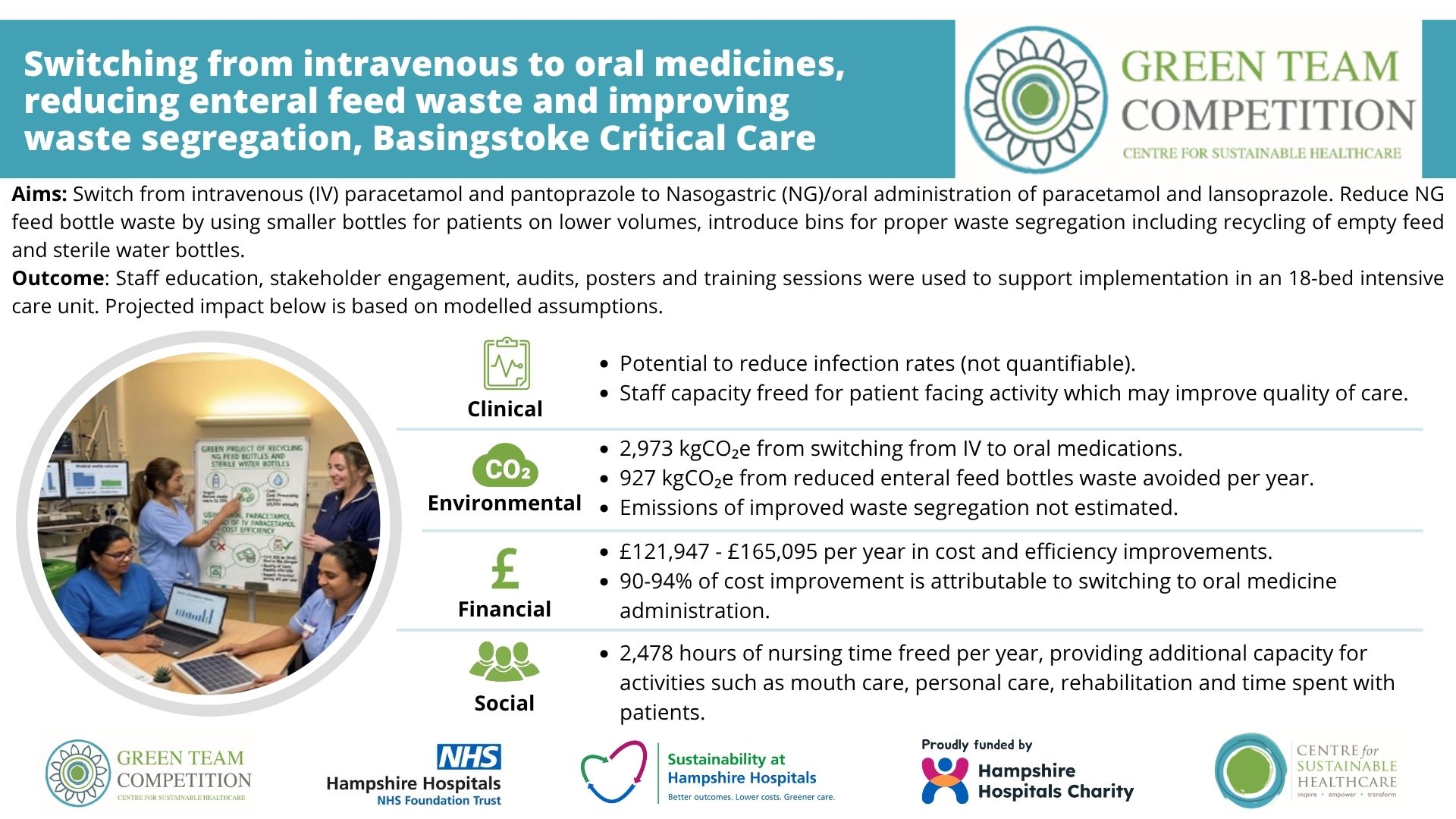
The team introduced dedicated domestic, offensive-waste and recycling streams to improve waste segregation; promoted recycling of NG feed and sterile water bottles; proposed using 500 mL NG feed bottles instead of 1 L bottles for eligible patients during the first two days of enteral feeding; and encouraged conversion from IV paracetamol to oral or NG administration and from IV pantoprazole to enteral lansoprazole where clinically appropriate. Staff education, stakeholder engagement, audits, posters and training sessions were used to support implementation.
Potential outcomes
Clinical
The project aimed to maintain safe and effective care while reducing unnecessary IV medication use. Potential benefits included reduced need for IV access, reduced infection risk associated with IV administration, and release of nursing time through reduced medication preparation and double-checking requirements. No adverse impacts on patient care were anticipated.
Environmental
Modelled analysis estimated annual carbon savings of 2,643 kgCO₂e from converting IV paracetamol to NG administration and 330 kgCO₂e from converting 50% of IV proton pump inhibitors to enteral administration. Reducing enteral feed waste was estimated to save a further 927 kgCO₂e annually. Total projected annual carbon savings across interventions were estimated at approximately 3,900 kgCO₂e.
Financial
The project estimated annual savings of £10,896 through improved waste segregation, £120 through recycling sterile water bottles, £809 through reduced feed volumes and waste disposal, and £110,122 to £153,270 through medicines optimisation. Total estimated annual financial savings were £121,947 to £165,095.
Social
The project increased staff awareness and engagement with sustainability and generated discussion about further improvement opportunities. Reducing IV medication administration was estimated to release approximately 2,478 nursing hours annually, equivalent to around 103 days of nursing time that could be redirected towards patient care activities.
Key learning point
A key learning point was that changing established clinical and operational behaviours takes time. Initial resistance was addressed through the use of audit data, evidence, and information on potential environmental and financial benefits. The project also highlighted the importance of protected time and adequate resources for sustainability work, as well as the value of prioritising interventions with the greatest potential impact. Interventions were more likely to gain support when environmental benefits were accompanied by clear clinical, financial or workload advantages.
 Download resource -
Please log in or sign up to comment.